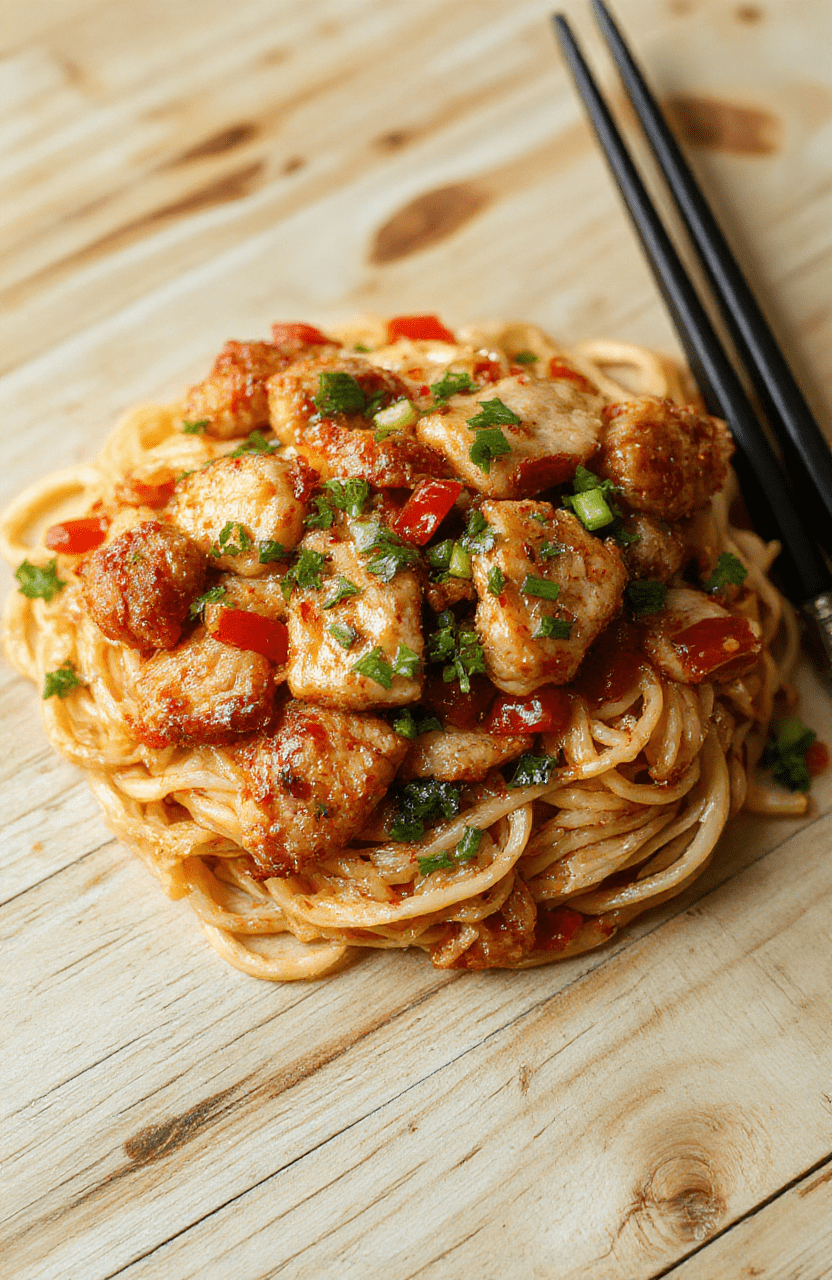
🌶️ Crispy, Spicy, & Irresistibly Savory: Kung Pao Noodles That Outshines Takeout 🍜
1. Introduction
There’s something deeply comforting about a steaming plate of kung pao noodles—textured with crunchy peanuts, tender chicken, and vibrant bell peppers, all clinging to chewy, glossy noodles in a bold, sweet-savory-spicy sauce. But let’s be honest: restaurant versions are often drown in oil or overloaded with sugar. This easy kung pao dinner fixes that. I’ve fine-tuned this recipe over countless trial batches to deliver that “better than takeout noodles” magic in under 30 minutes, with a sauce that balances ma la (numbing heat) from Sichuan peppercorns, rich umami from dark soy, and a touch of honey for depth. It’s the kind of dish you’ll crave on weeknights—and impress guests with on game day. In fact, I often pair it with my top game-day eats for the ultimate sports snack spread.
2. Why You’ll Love This Recipe
- ✅ Ready in 30 minutes—perfect for busy weeknights
- ✅ One-pan cooking—minimal cleanup, maximum flavor
- ✅ Better-than-takeout control—adjust heat, sweetness, and salt to your taste
- ✅ Fridge-to-table versatility—tastes great cold (as a noodle salad) or重温 hot
- ✅ Meal-prep friendly—re heats beautifully without turning mushy
3. Ingredient Notes
Quality matter—especially with fewer ingredients. Here’s why each choice counts:
- Sichuan peppercorns: Use freshly ground (not pre-ground) for that signature citrusy, tingling ma sensation. Toast them lightly in a dry pan first for intensified aroma.
- Chicken thighs (not breast): Thighs stay juicy during high-heat stir-frying. I cube them small (≈¾ inch) so they crisp slightly and absorb sauce faster.
- Double-strength sauce: I reduce 2 parts soy + 1 part Chinkiang vinegar + honey to 1 part before adding. This prevents soggy noodles and builds a glossy, clinging glaze.
- Duck fat or peanut oil: Both have high smoke points and add richness. Duck fat gives a deeper, savory undertone; peanut oil keeps it authentically sharp. *No substitutions needed if you prefer olive oil.*
- Dried chili segments (not flakes): Whole dried chilies (like arbol or jileno) infuse oil without burning. I toast them 30 seconds in hot oil first—this mellows their raw bitterness.
4. Kitchen Tools You Need
A few tools make stir-frying foolproof—even for beginners:
- 🔥 T-fal 14-Piece Hard Anodized Nonstick Cookware Set: The heavy-bottomed wok in this set heats evenly and prevents sticking—critical when you’re trying to crisp the chicken before adding noodles.
- 🥢 Deluxe 33-Piece Silicone Utensil Set: Flexible silicone scrape-and-fold tools let you gently toss noodles without breaking them, and won’t scratch your cookware.
- ❄️ JoyJolt Airtight Glass Food Storage Set: Store leftovers in these stackable jars—they preserve texture better than plastic, and you’ll want to save the extra sauce for next-day fried rice.
- 📝 Clever Fox DIY Family Recipe Journal: Jot down your heat preference (mine: 2 tsp crushed chilies + ½ tsp Sichuan pepper), and pass it down—best recipe journal I’ve used.
5. How to Make Savory Kung Pao Stir-Fry Noodles with Chicken
Phase 1: Prep & Marinate (10 mins)
Cube 1 lb boneless skinless chicken thighs into ¾-inch pieces. Toss with 1 tbsp soy sauce, 1 tsp Shaoxing wine, ½ tsp cornstarch, and a pinch of white pepper. While it rests, whisk sauce: 2 tbsp light soy, 1 tbsp Chinkiang vinegar, 1 tbsp honey, 1 tsp sesame oil, ½ tsp dark soy (for color), and 1 tsp cornstarch. *Pro tip: Grate fresh ginger and mince 3 garlic cloves separate—this prevents burning in the wok.*
Phase 2: Crisp the Chicken (3 mins)
Heat 2 tbsp peanut oil in your wok over high heat until smoking. Add chicken in a single layer and let sear undisturbed for 1 minute until deeply golden. Stir and crisp another 1–2 minutes. Remove chicken and set aside. *Visual cue: The chicken should lift cleanly—no pale, sticking bits.*
Phase 3: Infuse the Oil (45 seconds)
Reduce heat to medium. Add 10–12 dried chilies and 1 tsp Sichuan peppercorns (toasted & ground). Stir constantly until fragrant and chilies darken slightly—no browning! Do this right: underheat = raw bitterness; overheated = acrid smoke. *This step makes “better than takeout” happen.*
Phase 4: Sauté Aromatics & Glaze (3 mins)
Add ginger and garlic, stir 15 seconds. Toss in 1 cup diced bell peppers (red/yellow) and ½ cup sliced scallions. Pour in the sauce—it will bubble violently. Stir 30 seconds until thick and glossy. Return chicken and any juices. Toss everything together.
Phase 5: Finish with Noodles (2 mins)
Use 8 oz dried thin egg noodles (or lo mein, cooked al dente + rinsed in cold water). Add to wok with 1 tbsp oil to prevent sticking. Toss vigorously for 60 seconds to coat everything. Fold in ¼ cup roasted peanuts and reserved scallion greens. *Done when noodles glisten and sauce clings—no pool of oil.*
6. Expert Tips for Success
- “Wok Hei” hack: Your highest heat setting is your friend—but keep noodles moving. If they stick, deglaze with 1 tbsp Shaoxing wine (not water!).
- No soggy noodles: Overcook them 30 seconds less than package directs. They’ll finish cooking in the wok. Test: they should bend without snapping.
- Spice control: Remove chili seeds before toasting for milder heat, but keep 1–2 whole chilies for visual “crunch” at the end.
- Make it authentic: A tiny pinch of MSG (optional) deepens umami. I use ¼ tsp—it’s not “Chinese restaurant secret,” it’s just science.
7. Variations & Substitutions
- Vegetarian: Swap chicken for extra-firm tofu (pressed & cubed) or seitan. Marinate same as chicken. Add cubed shiitake mushrooms for chew.
- Gluten-free: Use tamari instead of soy, and rice noodles (rinse well—starch breaks down faster).
- Sweetener swap
- Nut-free:.Toast sunflower seeds or roasted chickpeas instead of peanuts.
- Extra veggie power: Add shredded bok choy or snap peas in Phase 4—they wilt in 60 seconds.
8. Storage & Reheating
Store cooled noodles in airtight containers up to 4 days. Reheat in a covered skillet over medium-low with 1 tsp water—cover and steam 3 minutes, then uncovered 2 minutes to crisp edges. Never microwave straight (noodles turn rubbery). For batches, chill sauce separately and toss just before serving. I’ve frozen the sauce alone (in ice cube trays!) for 3 months—it defrosts instantly when added to hot wok.
9. FAQ
Can I use fresh peppercorns instead of dried?
Yes! Use 1 tsp fresh Sichuan peppercorns (finely ground) added at the very end—fresh ones are brighter, but lose potency fast. Toast 2 minutes in dry skillet first.
My sauce is too thin—what went wrong?
You likely added sauce to a wok that wasn’t hot enough. The cornstarch needs >350°F to thicken. Fix: Remove noodles, reduce sauce 30 seconds over high heat, then recombine.
Do I have to use egg noodles?
No! Rice sticks (like banh pho) work, but reduce quantity by 20% (they expand more). Soba works for allergen needs—but their nuttiness competes with Sichuan flavors.
Why does the recipe call for dark soy?
Dark soy adds color and a subtle molasses-like depth—not saltiness! Skip if needed, but add ¼ tsp brown sugar to balance flavor.
10. Conclusion
This kung pao noodles recipe is my go-to for when hunger strikes but sanity calls for something smarter than delivery. It’s fast, deeply flavored, and endlessly adaptable—whether you’re feeding picky kids (remove chilies) or hosting a crowd (double the batch). Paired with a crisp ginger-scallion salmon or my sweet-and-spicy honey pepper chicken, it becomes a full, satisfying meal. And if you have a blast frying, consider my moist chocolate banana bread for dessert—sweetness is the perfect contrast to spicy heat. Let me know how your stir-fry turns out in the comments! 🍜🔥
Print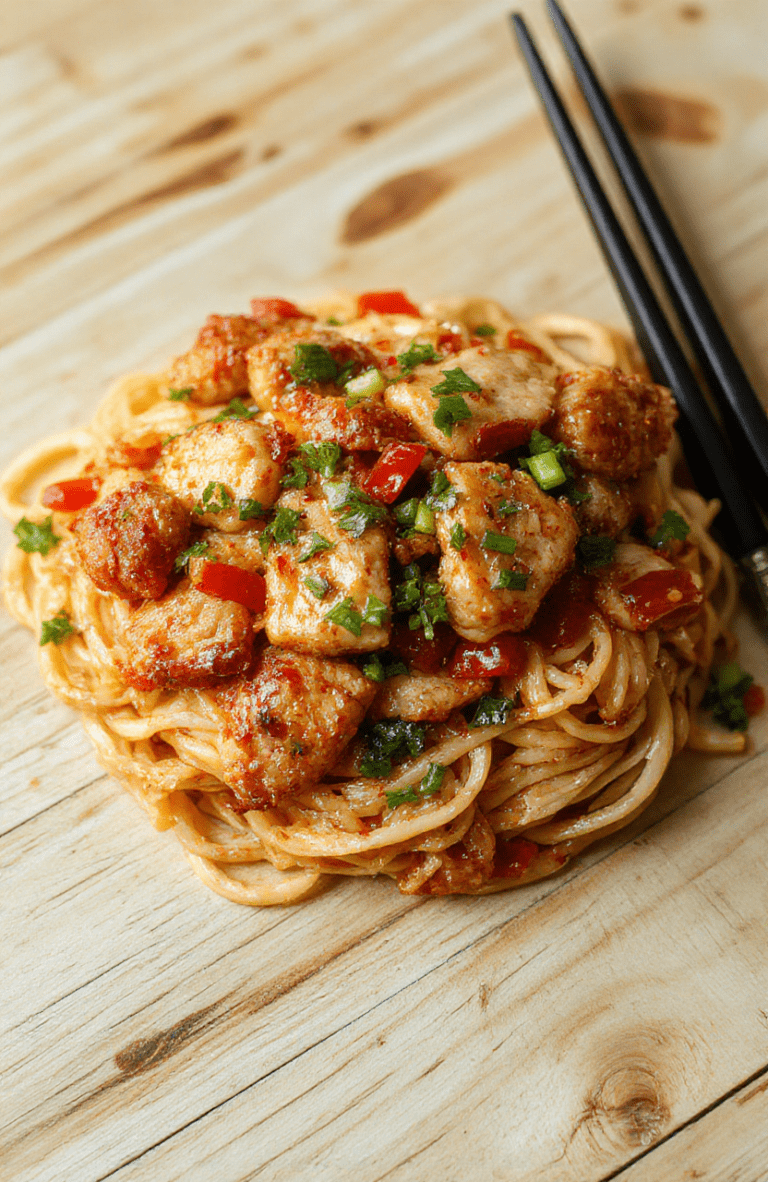
Savory Kung Pao Stir-Fry Noodles with Chicken
This faster, healthier version of classic kung pao noodles skips the deep-frying and packs in vibrant vegetables, lean chicken, and a rich, balanced sauce — all in under 30 minutes.
- Total Time: 30 minutes
- Yield: 4 servings 1x
Ingredients
- 12 oz udon noodles (or lo mein noodles)
- 1 lb boneless, skinless chicken breast, cubed
- 2 tbsp cornstarch
- 2 tbsp soy sauce (divided)
- 1 tbsp Shaoxing wine (or dry sherry)
- 1 tbsp sesame oil
- 1 tbsp neutral oil
- 2 cloves garlic, minced
- 1 tbsp fresh ginger, grated
- 1 red bell pepper, sliced
- 1 green bell pepper, sliced
- ½ cup roasted peanuts
- 2 scallions, chopped
- 1 tsp Sichuan peppercorns, lightly crushed (optional for numbing heat)
Instructions
- Cook noodles according to package instructions; drain and toss with 1 tsp sesame oil to prevent sticking. Set aside.
- In a bowl, toss chicken with 1 tbsp cornstarch and 1 tbsp soy sauce. Let marinate 10 minutes.
- Heat neutral oil in a large wok or skillet over high heat. Add chicken and stir-fry 3–4 minutes until golden. Remove and set aside.
- Add remaining oil if needed, then sauté garlic, ginger, and Sichuan peppercorns 30 seconds until fragrant.
- Stir in bell peppers and cook 2 minutes until bright but crisp.
- Return chicken to pan. Add cooked noodles, peanuts, remaining soy sauce, and remaining cornstarch mixed with 1 tbsp water. Toss 2–3 minutes until sauce thickens and coats everything.
- Garnish with scallions and extra peanuts. Serve immediately.
Notes
- For a vegetarian version, substitute tofu or seitan for chicken.
- Adjust heat with gochujang or red pepper flakes if Sichuan peppercorns aren’t available.
- Use fresh udon for best chew — avoid overcooking to maintain texture.
- Prep Time: 15 minutes
- Cook Time: 15 minutes
- Method: Stir-fry
- Cuisine: Chinese
- Diet: Contains: Gluten, Dairy-free, Contains: Tree Nuts (peanuts)
Nutrition
- Serving Size: 1 bowl
- Calories: 485 Kcal
- Sugar: 6g
- Sodium: 890mg
- Fat: 14g
- Saturated Fat: 3g
- Unsaturated Fat: 9g
- Trans Fat: 0g
- Carbohydrates: 68g
- Fiber: 4g
- Protein: 28g
- Cholesterol: 75mg