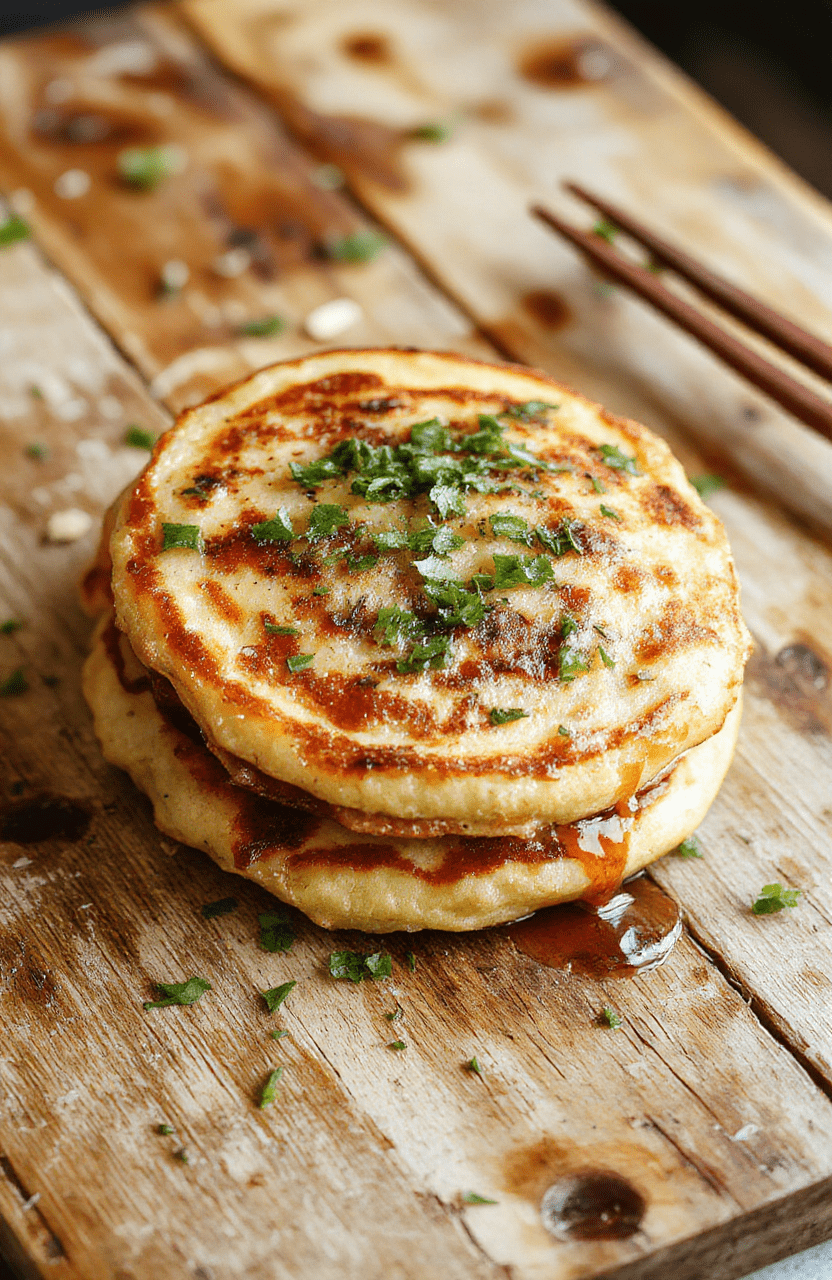
✨ Ultra-Crispy Korean Bindaetteok Recipe: Savory Mung Bean Pancakes with Golden Crunch 🥢🔥
1. Introduction
There’s something deeply satisfying about biting into a Korean pancake that shatters with a crackle, revealing a tender, savory interior perfumed with garlic, green onions, and earthy mung beans. These traditional Korean pancakes—known lovingly as bindaetteok or jeon—are a celebration of texture, umami, and street-food charm. Unlike wheat-based pancakes, authentic bindaetteok uses ground mung beans as its base, giving it a nutty depth and a crisp, delicate exterior that stays golden even after resting. Whether you’re hosting a Korean-themed dinner night or craving a comforting vegetarian main, this recipe delivers restaurant-quality results in under 45 minutes.
2. Why You’ll Love This Recipe
- Ready in 40 minutes (30 minutes prep + 10 minutes cooking per batch)
- One-pan cooking for minimal cleanup—perfect for busyweeknights
- Vegan-friendly option with simple swaps
- Gluten-free by nature (no wheat flour required!)
- Loaded with protein and fiber from mung beans
- Stunningly versatile: serve as an appetizer, light meal, or side to grilled meats
3. Ingredient Notes
Great Korean pancakes start in the pantry—and ingredient quality makes all the difference. Here’s why I’m particular about each component:
- Dried green mung beans (unsprouted): This is非negotiable. Sprouted mung beans won’t grind into the right flour. Look for whole, unsalted mung beans—opt for Korean or Indian brands like 24 Mantra or Swiss Mirchi for consistent texture. Soaking helps soften them for a smoother batter.
- rice flour (or tapioca starch): Adds lift and crispiness. Rice flour stays neutral and won’t alter flavor, while tapioca boosts crunch and chew. Both keep the pancakes gluten-free.
- Garlic and green onions: Fresh is best. Mince the garlic finely (or use a microplane), and chop the scallions just before mixing to retain their vibrant color and peppery bite.
- Korean red pepper flakes (gochugaru): This isn’t just for heat—it’s about bright, fruity smokiness. Use authentic coarse grind. If unavailable, blend ½ tsp paprika + ¼ tsp cayenne + pinch of dried kelp powder for depth.
- Soy sauce or tamari: My go-to is Kikkoman Less Salt for balance. Tamari works for gluten-sensitive friends.
- Peanut or canola oil: High smoke point is key for deep searing. Avoid olive oil—it burns and overpowers delicate flavors.
4. Kitchen Tools You Need
While minimal tools are required, using the right gear can elevate your bindaetteok from “good” to “thumb-sucking glorious.” A few strategic upgrades make a real difference:
- Food processor or high-speed blender: Pulse the soaked beans until finely ground (not pureed). Overprocessing creates paste—not batter. (For batch prep, the Ninja Mega Kitchen Power System handles this in seconds.)
- Heavy-bottomed skillet or cast iron pan: Uneven heat = uneven browning. The T-fal 14-Piece Hard Anodized Nonstick Cookware Set conducts heat beautifully and resists hot spots.
- Pizza cutter or sharp knife: Easier than a chef’s knife for slicing warm, golden pancakes into bite-sized pieces.
- Instant-read thermometer: Keep oil between 350°F–375°F. Too hot? burnt edges. Too low? greasy pancakes. The Ninja Air Fryer Pro Crisp & Roast 4-in-1 is a smart backup for reheating leftovers to maximum crunch.
- Wire rack + baking sheet: Drain excess oil without sogginess. Place cooked pancakes on a rack over a sheet pan to keep crisp.
5. How to Make Crispy Korean Pancakes (Bindaetteok)
This recipe follows a 3-phase method: Soak → Blend → Pan-Fry. The secret? Patience during soaking and precision during frying.
Phase 1: Prep & Soak (1 hour)
1. Rinse 1 cup dried mung beans under cold water until water runs clear. Soak in 2 cups warm water for 1 hour.
2. Drain. Add beans to a food processor with ¼ cup water. Pulse 15–20 times—just until ground to a coarse meal (like coarse sand). No fully liquid batter!
3. Transfer to a bowl. Stir in 2 tbsp rice flour, 1 tbsp gochugaru, 1 tbsp soy sauce, 1 tsp sesame oil, ½ tspSugar, 1 minced garlic clove, and 3 chopped green onions. Mix well. Let rest 15 minutes—this lets flavors meld and the flour hydrate.
Phase 2: Shape & Rest (10 minutes)
4. Line a tray with parchment. Lightly oil your hands. Scoop ⅓-cup portions and form into ½-inch thick patties. Place 1 inch apart on tray. Cover with damp towel—this prevents skin formation before frying.
Phase 3: Pan-Fry to Perfection (10 minutes)
5. Heat ¼ inch oil in a 12-inch skillet over medium-high heat until it reaches 350°F (a breadcrumb sizzles immediately). Carefully add 2–3 patties, leaving space. Fry 2–3 minutes per side, until deeply golden and crisp.
6. Drain on wire rack. Repeat. Serve hot with spicy dipping sauce (see tip below) and fresh cabbage slaw.
6. Expert Tips for Success
Even experienced cooks can trip up here—I’ve been there! Here’s how to avoid bindaetteok blunders:
- The oil test trick: Drop a tiny batter glob into oil—if it rises, bubbles, and browns in 30 seconds, you’re golden. Adjust heat before overcranking.
- Dry beans = drier batter: If your batter feels wet, add rice flour 1 tsp at a time. It should hold shape when pressed but not crack.
- Don’t flip too early: Wait until edges lift easily and crust is set (2+ minutes). Use a wide spatula—no prying!
- Double-fry for extra crunch: After first fry, let cool 10 minutes. Re-fry 30 seconds at 375°F right before serving.
- Make Ahead: Unfried patties keep covered in fridge 24 hours. Fry fresh—no reheating in microwave!
7. Variations & Substitutions
Embrace flexibility without sacrificing texture:
- Vegetarian/vegan: Use tamari, skip honey in dipping sauce (sub maple syrup), and add 1 tbsp nutritional yeast for umami boost.
- Protein-packed: Stir in ¼ cup diced shiitake mushrooms or crumbled firm tofu before mixing.
- Spice level: Reduce gochugaru to ½ tsp for mild or add 1 finely minced Thai chili for serious heat.
- Gluten-free (always): Already GF! Just ensure soy sauce is tamari or certified GF.
- Cheese lover’s twist: Fold in 2 tbsp crumbled feta or grated Gouda just before frying—a non-traditional but drool-worthy twist!
8. Storage & Reheating
These pancakes are best fresh, but leftovers keep beautifully:
- Fridge: Store cooled patties in airtight container up to 3 days. Separate layers with parchment.
- Freezer: Freeze uncooked patties on tray, then transfer to bag. Bake straight from frozen at 400°F for 6–8 minutes per side (flip once).
- Reheat: Air fry at 375°F for 3–4 minutes for maximum crisp revival. Never microwave—it destroys texture.
9. FAQ
Q: Can I use canned mung beans?
A: No. Canned beans are cooked, soft, and too wet—they’ll make a soggy, gluey batter. Always use dried, soaked beans.
Q: Why are my pancakes greasy?
A: Oil was too cool (< 340°F), or you flipped too early. Use thermometer. Also, drain on a wire rack—not paper towels alone.
Q: Can I bake these instead of frying?
A: Not ideal—they lose the signature crisp. For healthier versions, try an air fryer: 375°F for 10 minutes, flip, 3 more minutes. But pan-frying remains king for texture.
Q: How do I prevent sticking?
A: Heat pan first, then add oil and swirl. Wait 30 seconds before placing patties. Don’t move them for the first 2 minutes.
10. Conclusion
There you have it—authentic, ultra-crispy Korean pancakes that honor tradition while fitting modern life. With their satisfying crunch, savory-sweet-spicy flavor profile, and nutrient-rich mung bean base, these bindaetteok deserve a permanent spot in your weekly rotation. Whether you pair them with juicy garlic butter steak or enjoy them solo as a light meal, each bite tells a story of Korean comfort. And if you try them? Share a photo and tag me—I love seeing your kitchen wins!
Print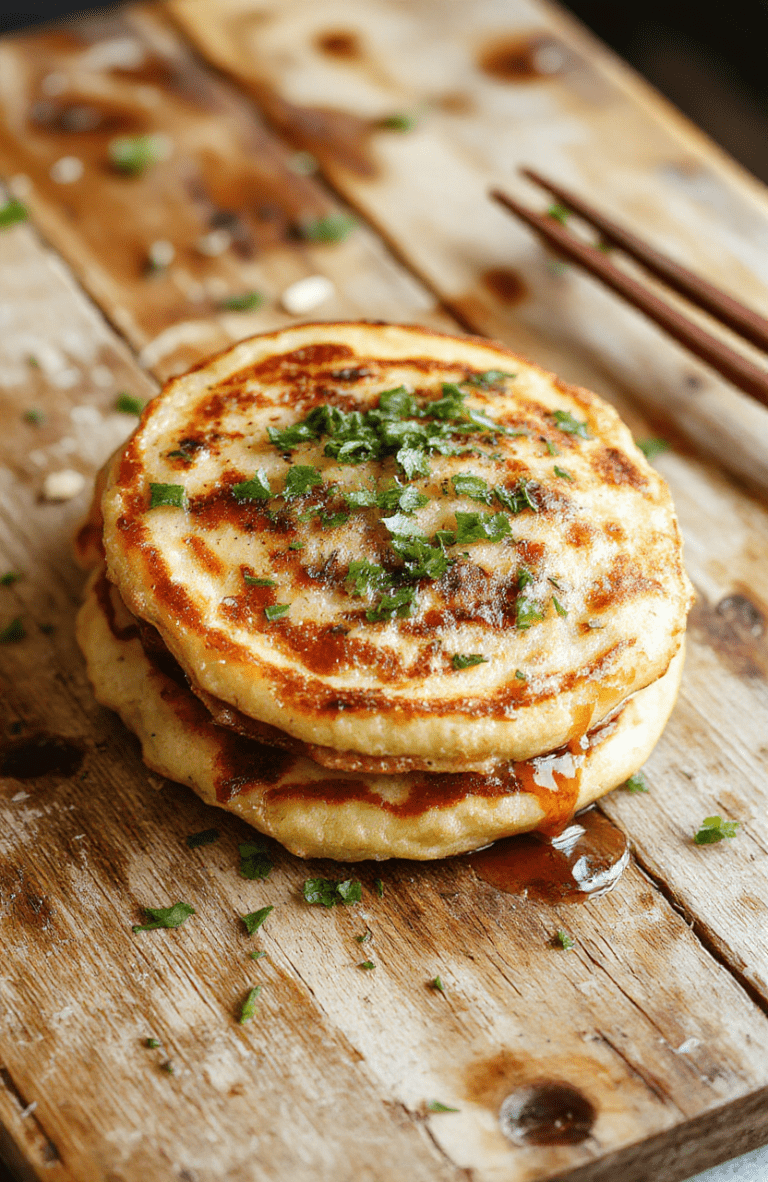
Crispy Korean Pancakes Recipe
These Crispy Korean Pancakes ( Jeon ) are easy to make, gluten-free (if using rice flour), and bursting with savory umami flavor. They’re perfect as a snack, appetizer, or even a light meal.
- Total Time: 25 minutes
- Yield: 4 pancakes 1x
Ingredients
- 1 cup all-purpose flour (or rice flour for GF)
- 1/2 cup mung bean flour
- 3/4 cup water
- 1 cup shredded Napa cabbage
- 1/2 cup shredded carrot
- 1/4 cup chopped green onions
- 1 clove garlic, minced
- 1/2 tsp salt
- 1/4 tsp black pepper
- 2–3 tbsp vegetable oil for frying
- Sesame seeds and extra green onions for garnish
Instructions
- In a large bowl, whisk together flours, salt, and pepper. Gradually add water to form a thick, pancake-batter consistency.
- Stir in cabbage, carrot, green onions, and garlic.
- Heat 1 tbsp oil in a nonstick skillet over medium heat. Pour 1/4 of batter into pan, spreading slightly into a round.
- Fry 3–4 minutes per side until golden brown and crisp. Repeat with remaining batter, adding oil as needed.
- Garnish with sesame seeds and green onions. Serve immediately with soy-ginger dipping sauce.
Notes
- For extra crispiness, press pancake gently with spatula while frying.
- Doubling the batch works great for sharing! Store leftovers in fridge up to 2 days; reheat in air fryer or skillet.
- Make it vegan by skipping honey in dipping sauce (use soy sauce, rice vinegar, sesame oil, ginger, and mirin).
- Prep Time: 10 minutes
- Cook Time: 15 minutes
- Method: Pan-fry
- Cuisine: Korean
- Diet: Vegetarian
Nutrition
- Serving Size: 1 pancake
- Calories: 120 Kcal
- Sugar: 2g
- Sodium: 210mg
- Fat: 5g
- Saturated Fat: 1g
- Unsaturated Fat: 3g
- Trans Fat: 0g
- Carbohydrates: 18g
- Fiber: 2g
- Protein: 3g
- Cholesterol: 0mg